MILIVOJEVIĆ: GERMANY SEEKING TO SHIFT GLOBAL FAILURES THROUGH PRESSURE ON SERBIA AND REPUBLIKA SRPSKA
Serbia - EU - region
12/25/2025
09:18

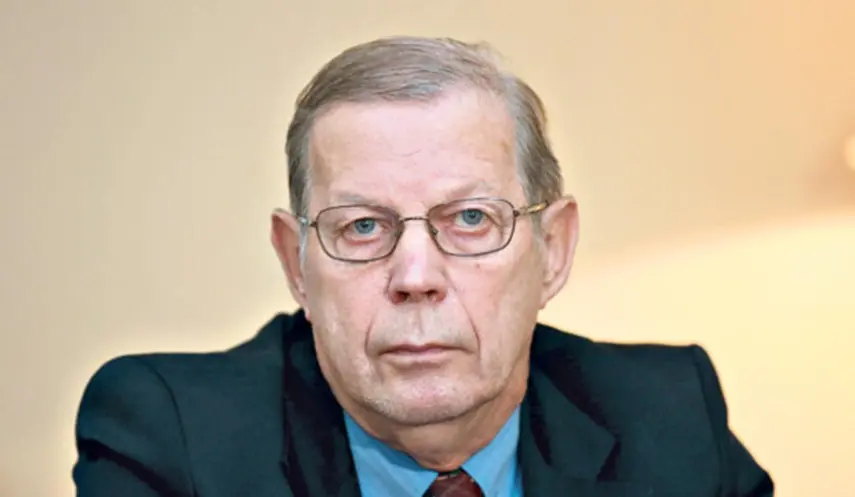
BELGRADE, DECEMBER 25 /SRNA/ – In all current pressures directed at Serbia and Republika Srpska, starting with Christian Schmidt and beyond, Germany can be clearly identified as the driving force, and it will further intensify its offensive against the Serbs in order to compensate for what it has failed to achieve on the global stage, as well as to offset the damage caused by its increasingly radical stance toward Russia, diplomat Zoran Milivojević told SRNA.
Commenting on divisions within the EU and France’s resistance to the German initiative to use frozen Russian assets, Milivojević said that recent EU leaders’ meetings have shown ever more clearly that Germany and its Chancellor Friedrich Merz are adopting a tougher stance on the war in Ukraine, European interests, and broader global developments.
"It is evident that Germany is aligning itself with the northern group of countries – the Baltic states and Scandinavia, as well as the Netherlands – which are taking a hardline position on continuing the war with Russia and shaping a new security architecture in Europe," Milivojević said.
He noted that this was also evident in attempts to seize Russian assets and use them in ways contrary to international law and established norms.
"This has caused a split, because on the other side are the traditional ‘old Europe’ countries - France, Italy, and Spain - which believe that solutions should be sought through political engagement, diplomacy, and efforts to end the war," Milivojević explained.
He added that these countries proceed from a realist perspective and the understanding that Russia is, after all, a European country and must be factored into any future security architecture.
"This is also how the new French initiative for dialogue with Russian President Vladimir Putin should be understood, an initiative joined by Italy as well," Milivojević said.
He noted that the same division was visible in the case of Serbia, particularly regarding Cluster Three in EU accession negotiations.
"Here too, the hard northern line led by Germany opposed opening that cluster for Serbia, based on geopolitics and Serbia’s position toward Russia," Milivojević said.
He reminded that, on the other hand, a group of countries led by France supported opening Cluster Three for Serbia.
"This is not primarily about Serbia, but Serbia is involved because its position is linked to the Russian issue. The core motive is the stance toward Russia and the war in Ukraine. That division is evident, and it is clear that France does not want to cede primacy to Germany," Milivojević assessed.
According to him, France does not accept Chancellor Merz’s view that Germany should become Europe’s leading power through future militarization and military strengthening.
"France clearly does not want that. One must also bear in mind that the EU essentially rests on one key pillar – the Franco-German relationship," Milivojević said.
He added that the French position, and that of part of Europe, is closer to the new policy of Washington, which opposes the war in Ukraine and seeks alternative solutions.
"In that sense, this division is gradually emerging as something that will shape political developments in this part of Europe and within the EU in the future," Milivojević said.
He warned that, because of ive German policy in the region should be expected, as Germany lacks the capacity to assert itself as a global power.
"That is why it will seek to consolidate its interests in this region, bearing in mind history, primarily the fact that the German factor was once dominant here and even sparked wars over this territory," Milivojević said.
He reminded of the annexation of BiH at the beginning of the 20th century, the militarization of Germany between the two world wars, and Germany’s unwavering support for the Albanian factor.
Milivojević said it is difficult to avoid the impression that Germany wants to intensify its offensive in this region to compensate for failures on the global stage and the economic damage caused by its stance toward Russia, which has resulted in economic stagnation and growth of just 0.1 percent.
"One should always remember that great powers – and Germany is a major European power – have historically resolved such issues in radical ways, attempting to impose strategic interests by force. That is why I foresee a more aggressive German approach in this region in the future," Milivojević concluded.
He also said it is no coincidence that Serbian-French relations are gaining momentum, nor that France is returning to its traditional interests in the region.
"This is also a form of counterbalancing German interests in this area," Milivojević said.

DODIK: EUROPEAN PATH POSSIBLE WHEN BRUSSELS ACCEPTS SRPSKA WITHIN ITS CONSTITUTIONAL CAPACITY
DODIK: ANNUL DECISIONS THAT HAVE NOT GONE THROUGH PARLIAMENTARY PROCEDURE
DODIK: REPUBLIKA SRPSKA DELEGATION TO VISIT CHINA BY THE END OF THE YEAR
DODIK: PROCLAIMING NEW CONSTITUTION ON JANUARY 9 PLANNED