KNIGHTS OF SKY IN FIGHT AGAINST NATO
Serbia - culture of remembrance - Colonel Milenković
04/13/2026
10:34
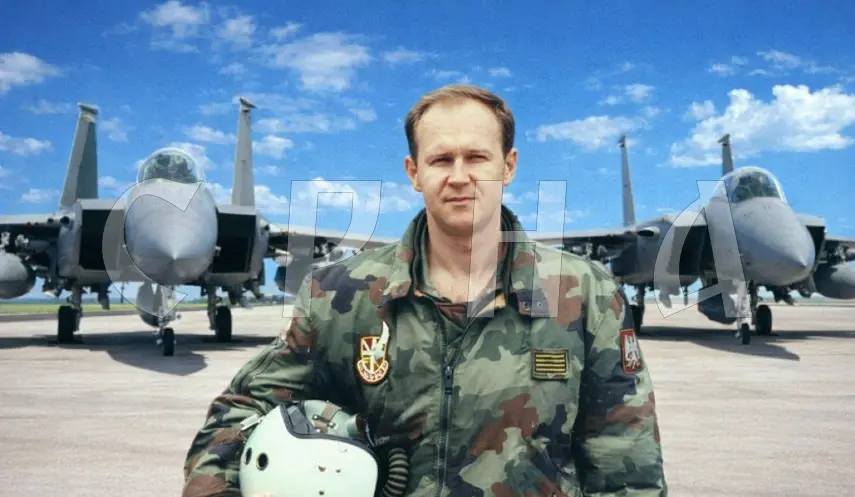
Children should be taught that there were people to whom freedom mattered more than life itself. Pilots Slobodan Perić and Zoran Radosavljević were among those who, without fear of a far more powerful enemy, confronted NATO aviation. After their aircraft were hit by enemy missiles, Perić was found alive on the territory of Republika Srpska, while Radosavljević gave his life for freedom.
Interviewed by: Vesna Šurbat
BEOGRAD, APRIL 13 /SRNA/ – Yugoslav Army pilot, Colonel Slobodan Perić, after ejecting from an aircraft hit during clashes with NATO aviation during the 1999 aggression, landed in Republika Srpska near Ugljevik, where local residents accepted him as one of their own and helped him return across the Drina River to his unit.
Perić, a fighter pilot of the Yugoslav Air Force unit “Knights,” was one of the pilots who, in defence of the homeland, bravely took off daily against a far more powerful enemy, without concern for his own life.
His comrade from the Knights Unit, retired aviation colonel Dragan Milenković, told SRNA that when Perić ejected, he was found by armed Serb locals who at first did not know whether he was a Serbian or NATO pilot.
"They didn’t believe he was our pilot, they thought they had captured a foreigner. But later they believed him, escorted him back, and he returned to his unit," Milenković said.
On that same day, March 26, 1999, Zoran Radosavljević was also on duty with Perić; he was killed, and his body was also found by villagers in a village near Ugljevik. Perić later died in a traffic accident in 2010.
LOCAL SERBS THOUGHT PERIĆ WAS NATO PILOT
Perić and Radosavljević took off that day on a mission to intercept targets. Milenković says the unit soon learned that both had been shot down- Perić was alive and had landed in Republika Srpska, while Radosavljević was hit by a NATO missile and killed.
Milenković noted that it is not known how many NATO aircraft were in the air at the time. Fortunately, Perić was not injured after ejecting and landing. He knew only that he had landed in BiH, but not whether he was among Serbs or Bosniaks.
The armed Serb locals who found him did not immediately know whether he was a NATO pilot. When he showed his identification, they commented, "Look how well equipped he is", But once they believed him, they accepted him as one of their own.
PERIĆ’S EXPERIENCE WITH NATO MISSILES HELPED ME SURVIVE
Milenković recalled that everyone was relieved to hear that Perić had survived, and that much later he spoke about how he had been shot down and how he escaped.
He emphasized that what Perić told him about seeing the trails of missiles fired at him helped him during his own flight.
"I also saw those missile trails aimed at me during my flight, and that helped me survive," Milenković said.
Milenković remembered that pilot Ilja Arizanov appeared alive that same day after surviving for two and a half days in Kosovo and Metohija following ejection from a damaged aircraft.
ALWAYS READY TO CONFRONT ENEMY
According to him, Perić was a man who, like all other pilots, simply did his job and trained to defend the country.
When NATO bombs began falling on Serbia on March 24, 1999, Milenković said they were all together at the Batajnica military airbase near Belgrade, and that Perić and he were on highest alert duty three times that day.
"When the signal for takeoff is given, whoever is closest, since we were all on the list to fly, grabs a helmet first and gets ready, and that one gets into the aircraft," he recalled.
Milenković and Perić were the fastest to reach the aircraft three times that first day of bombing, but among the first to take off were their colleagues Ljubiša Kulačin and Nebojša Nikolić Keša / who were among five pilots who took to the skies on March 24, 1999 - the first day of NATO aggression - three of whom did not return/.
"For such deeds, the state should repay them by ensuring that in schools we teach what these people did to defend freedom. Our children should hear that there were people to whom life was not as important as freedom," Milenković emphasized.
Milenković reminds that he continued to spend time with Perić after the NATO aggression; Perić died in a traffic accident near Osečina in 2010.
Colonel Slobodan Perić took off on March 26, 1999, the third day of NATO aggression against the Federal Republic of Yugoslavia and Serbia, alongside Major Zoran Radosavljević toward the area of Bečej and Valjevo, where they were hit in combat.
The wreckage of the aircraft and Radosavljević’s body were found in Trnova near Ugljevik. Local residents, together with Republika Srpska Army, transferred his remains to Serbia, where he was buried. He was posthumously awarded the Order for Bravery.
A street in Batajnica was named after him, and the best student of the air traffic programme at the Faculty of Transport in Belgrade receives an award named after Zoran.
Since September 1999, a sailing regatta called the "Zoran Radosavljević Memorial" has been held on the Montenegrin coast and on Belgrade’s rivers, and many sailing and aviation clubs in the country bear the name of this honourable Serbian Air Force pilot.